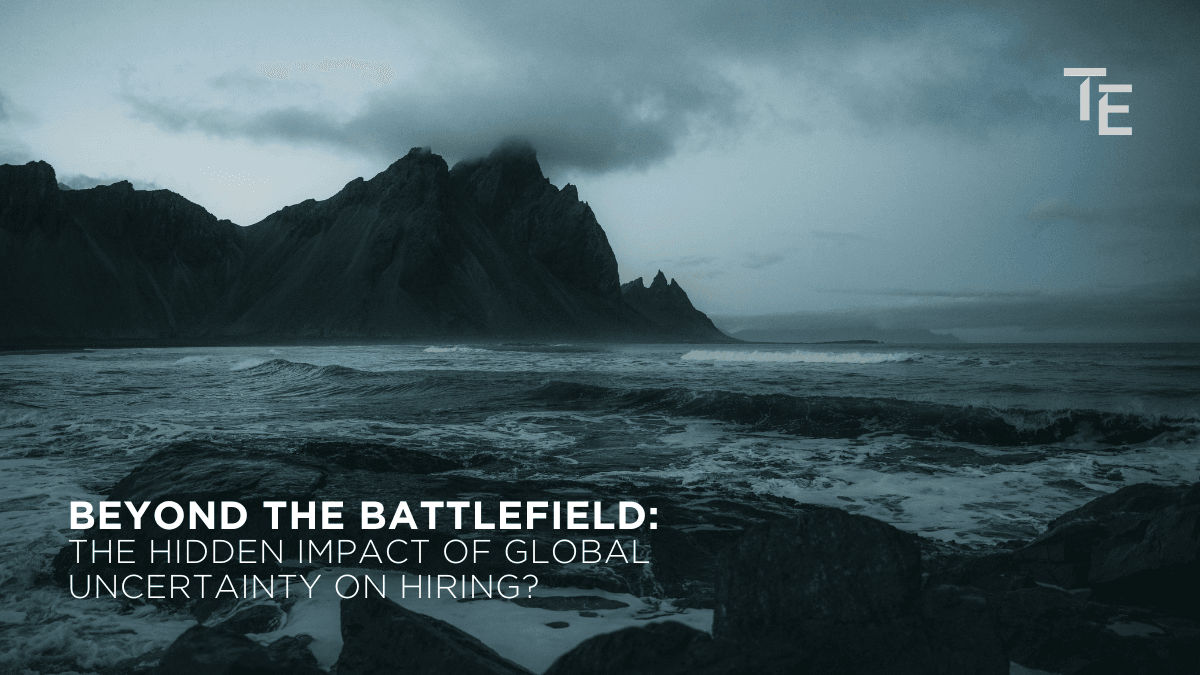
Rising geopolitical tensions and instability in global energy markets have sent a wave of uncertainty across the world. The impact is no longer limited to geopolitics or energy resources; it has steadily trickled down into global hiring and workforce dynamics.
As fuel prices surge and access to energy resources becomes less predictable, industries across aviation, travel, manufacturing, retail, and logistics are feeling the pressure. Increased operational costs are forcing organizations to reassess expansion plans, tighten hiring budgets, and in many cases, prepare for layoffs. At the same time, candidates are navigating fewer opportunities while facing a significantly higher cost of living.
Thoughts of a Talent Leader
Having worked closely in recruitment and talent management with hyper-growth startups, I have helped organizations scale rapidly while also navigating multiple cycles of uncertainty: COVID-19 layoffs, rapid hiring booms, and the subsequent corrections. I’ve seen the impact from both sides, and neither side comes out unscathed.
Today’s uncertainty, driven by energy market volatility and global instability, has once again put both employers and employees on edge. But it has also reshaped how we define growth and resilience.
For employers, the focus is shifting from rapid expansion to sustainable, efficient growth. Company headcount does not seem to be the primary indicator of success. Organizations are leaning into leaner teams, smarter hiring strategies, and increased automation to drive productivity, especially within hiring and operations — for example, resume screening, scheduling, reporting, and customer support. As a result, teams can focus more on strategic, high-impact work while scaling productivity without significantly increasing headcount.
Impact on Industries and Employers
Some industries have been hit harder than others, particularly aviation, manufacturing, retail, and logistics. The rise in fuel costs has disrupted supply chains, reduced margins, and forced organizations to rethink how they operate and grow.
In markets like Canada, sectors such as manufacturing, construction, transportation, and logistics are under strain. Employers are facing tighter hiring budgets, while candidates are seeking higher wages to keep up with inflation. This widening gap is making hiring more complex than ever.
As a result, organizations are shifting toward more flexible workforce models — contract-based roles, temporary staffing, and project-driven hiring are becoming the norm rather than the exception.
What It Means for Employers
Employers have embraced more thoughtful and disciplined hiring approaches. The era of aggressive headcount expansion – once a common practice, often driven by investor pressure – has given way to efficient hiring and resource optimization. The emphasis has now moved from speed to sustainability, with organizations prioritizing resilience through this period.
At the same time, organizations are becoming more comfortable adopting remote and flexible work models. This not only expands access to a broader talent pool but also strengthens employer branding while reducing operational costs. Alongside this shift, companies are investing in smarter workforce strategies, leveraging automation to streamline operations and reduce manual, repetitive work.
Consistency and scalability have become key priorities. Organizations are increasingly relying on data-driven decision-making rather than reactive hiring. There is a stronger focus on role clarity, skills alignment, and measurable impact to ensure each hire delivers meaningful value and supports broader business goals. Growth is no longer defined by how many people you hire, but by how effectively your teams perform.
What It Means for Employees
For employees, expectations are steadily rising. Upskilling is no longer optional — it’s essential. The ability to adapt quickly, continuously learn, and effectively leverage tools such as AI is fast becoming a baseline requirement rather than a differentiator. Roles are evolving faster than ever, and employees are expected to stay relevant in real time, often beyond the scope of their original job descriptions.
However, this shift cannot place the burden solely on employees. Sustainable growth requires balance. Employers play a critical role in enabling this transition by providing access to learning opportunities, clear development pathways, and the right tools to succeed. Without that support, the expectation to constantly upskill can quickly lead to burnout rather than growth.
When employees feel secure, supported, and valued, they are far more likely to stay and contribute meaningfully. In response, many organizations are placing greater emphasis on retention — investing in internal mobility, career development, and engagement initiatives to unlock the full potential of their existing workforce. Rather than relying solely on external hiring, companies are recognizing the long-term value of developing and retaining the talent they already have.
In our day-to-day interactions in Canada, we’re seeing this shift reflected in candidate expectations. Candidates are prioritizing employers who invest in career development and long-term growth. This goes beyond compensation — candidates are looking for clear progression pathways, access to learning opportunities, and roles that help them build future-ready skills. In a more uncertain job market, stability and internal growth opportunities have become key decision factors, giving a clear advantage to organizations that actively commit to employee development.
A Shared Responsibility
This is not a one-sided adjustment. Both employers and employees must meet in the middle, with higher expectations from each other.
While the current environment is challenging, it is also an opportunity to reset, moving away from unsustainable growth models toward more resilient and balanced ways of working.
Uncertainty is never comfortable, but it often forces necessary change. And when stability returns, those who adapted intelligently, both organizations and individuals, will be better positioned than before.
Key Takeaways & Your Guided Solution
- Global uncertainty is reshaping the rules of hiring and growth.
- Employers are prioritizing efficiency and resilience over rapid expansion.
- Employees are expected to continuously adapt and upskill.
- The organizations and individuals who strike the right balance between performance and sustainability, growth and stability, will be the ones best positioned to thrive in an unpredictable world.
At Talent Edge, we help companies build scalable talent engines — hire better, grow faster and lead smarter. Built by experienced Talent Acquisition leaders and search professionals, we understand the realities of scaling teams in uncertain environments.
Our approach combines Talent Acquisition and Talent Advisory to deliver an end-to-end solution — from identifying and hiring top talent to strengthening internal capability. By combining deep market insight, flexible partnership models, and a strong understanding of your organization’s structure and goals, we go beyond the traditional agency model.
If you’re looking for a partner who understands your challenges and can help you navigate them effectively, let’s connect.
About the Author
Jaudat (JD) Sulehri is the Lead, Talent Acquisition at Talent Edge. He partners closely with founders and senior leaders to build high-performance teams and resilient organizational cultures. He has previously supported recruitment and talent growth initiatives across a range of hyper-growth and venture-backed companies, including AIO (AI), SadaPay (FinTech), Careem, and KeepTruckin (Transportation & Logistics Tech).