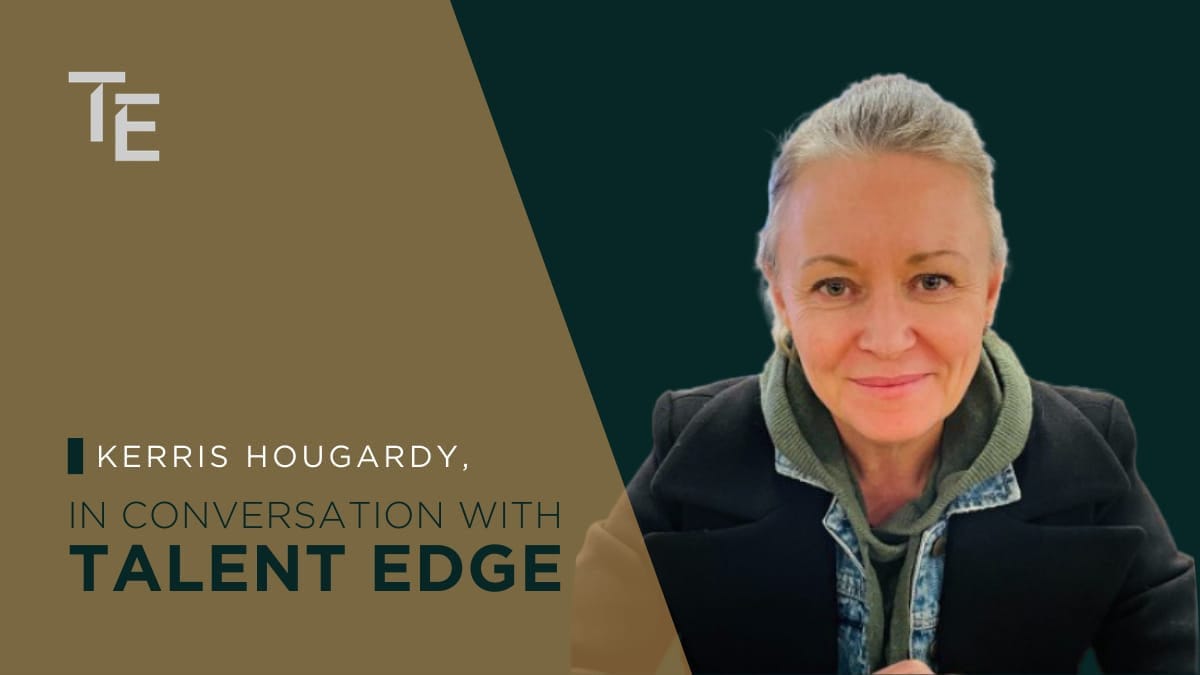
In a world of rapid change, HR leaders can no longer afford to think of themselves as mere policy managers or “people” specialists; they must be business strategists first. This perspective is championed by Kerris Hougardy, a seasoned HR executive with over 20 years of experience. Hougardy’s unconventional career path (spanning multiple industries and even continents) has shaped her belief that HR’s value comes from driving business outcomes, not just enforcing rules. In a recent Talent Edge conversation with Emily Kwan, she shared candid insights on how HR can move beyond administrative work and step confidently into strategy and business execution. Below, we unpack Hougardy’s leadership philosophy, blending her real-world stories with actionable insights, to illuminate how modern HR leaders can elevate their impact in the boardroom and beyond.
Thinking Like a Business Leader (Not Just “HR”)
Ask any HR professionals about their goals, and you’ll often hear a desire for “a seat at the table.” Hougardy believes the focus is misplaced. Simply getting into executive meetings isn’t enough; you have to bring business acumen once you’re there. Too often, she notes, HR leaders finally gain that coveted seat but default to traditional HR checklists (performance reviews, training programs, compensation plans) without linking them to what the business actually needs.
Hougardy argues that HR leaders must think and speak the language of the business as fluently as any CFO or GM. “You need to understand how that business makes money, who the customers are, where the margins are tight, what’s slowing productivity, what’s stalling execution, etc.” she says, pointing out that no other role has the same cross-functional visibility that HR does. By grasping the key drivers across sales, operations, finance, and beyond, HR can proactively shape decisions rather than simply react to them. She emphasizes the importance of relentless curiosity and a willingness to ask the tough questions, even outside one’s functional comfort zone. Over time, that kind of business fluency builds the credibility to challenge assumptions and influence strategic decisions. If HR can’t speak confidently about margins, productivity, and performance, it risks being viewed as overhead rather than a strategic partner.
The payoff for HR leaders who embrace this mindset is enormous. Hougardy notes that once you prove you can connect people’s initiatives to profit and performance, you stop having to fight for inclusion; you’ll be invited by default. In fact, when HR truly speaks to business outcomes, executives begin to say they can’t make decisions without HR at the table. The conversation shifts from “Why is HR here?” to “We need HR’s perspective before we move forward.” And that is exactly where she believes great HR leaders should be.
From Policy Enforcer to Performance Enabler
Early in her career, Hougardy earned a reputation as someone who isn’t afraid to bend the rules when it serves the business. “My personality is more of a rule bender than a rule maker,” she laughs. This isn’t about recklessness; it’s about cutting through red tape to enable speed, accountability, and results. Too many organizations remain “anchored in policy-heavy HR,” fixated on handbooks and approvals at the expense of agility. Hougardy’s view: HR’s primary job isn’t to play compliance cops, but to communicate risk and empower business leaders to make informed decisions.
Hougardy applies a common-sense filter to HR policies. If a rule doesn’t protect the business or the people in a significant way, why do you have it? “I believe that policies… should protect our business financially, legally and psychologically for our employees,” she says, covering things like fraud, harassment, and law-breaking behavior. “The rest of it should be common sense,” she adds. That doesn’t mean anything goes. Consistency and fairness still matter but it does mean avoiding one-size-fits-all rules that bog down progress. By stripping away needless bureaucracy, HR can focus on speeding up decisions instead of slowing them down. Hougardy’s mantra is to establish clear boundaries where it truly counts (legal, financial, ethical lines that must not be crossed) and allow flexibility everywhere else. The result? A culture where accountability and performance flourish because people aren’t hamstrung by rules, they’re guided by principles and good sense.
Culture Is a Business Outcome – Not an HR Program
Perhaps Hougardy’s boldest stance is HR doesn’t own culture; the business does. “Culture is everybody’s responsibility. It’s not HR’s responsibility,” she says, emphatically rejecting the notion that a Chief People Officer can unilaterally design culture. In Hougardy’s eyes, culture isn’t a set of slogans on a poster or feel-good initiatives coming out of HR – it’s the collective result of how people in the organization behave and make decisions each day. And that, she argues, starts at the very top. “The CEO sets the tone every single day,” Hougardy observes, underscoring that leaders lead by example whether they intend to or not. If a CEO is opaque and micromanaging, she warns, you’ll get a secretive, cautious culture. If the CEO is transparent, communicative, and approachable, those traits will cascade through the ranks. “The behaviours that the CEO demonstrates are the behaviours that get copied,” she says simply – and that defines culture far more than any HR-driven initiative ever could.
“A pool table in the break room isn’t culture. Pizza night isn’t culture… culture is how you feel on Sunday night before you go to bed, knowing you’re going to work the next morning,” Hougardy explains.
In other words, culture is the emotional reality of your workplace: Do people feel motivated or miserable? Included or ignored? Energized or burned out? Those outcomes can’t be engineered by HR in a vacuum. Hougardy struggles to understand HR leaders who talk about “creating” or “changing” a culture with a new program or initiative. Perks and parties are nice gestures, but authentic culture runs much deeper. It’s woven into everyday interactions, decisions, and attitudes. That’s why Hougardy sees her role (and HR’s role) as supporting and influencing the real owners of culture: the leadership team and employees themselves. Hougardy’s philosophy frees HR from playing cruise director and instead positions it as the compass keeping the organization aligned with its true north values, especially as the company grows or faces change.
Courage and Compassion in Tough Moments
Being an HR leader often means being the bearer of difficult news. Layoffs, pay freezes, office closures, return-to-office mandates – these decisions can be necessary for the business yet unpopular with employees or even fellow leaders. Hougardy argues that courageous HR leadership is about facing these moments head-on, with transparency and heart. Importantly, the groundwork for handling tough calls is laid long before the decision lands on your desk. “I try to make sure that I bring integrity, credibility and trust to the table every single conversation I have right from day one,” Hougardy says. In practice, that means investing daily in relationships, following through on promises, communicating honestly, and demonstrating empathy even during good times, so that employees and executives alike trust her when the news isn’t good.
When delivering bad news, Hougardy emphasizes a balance of candor and compassion. “It is about being candid. It is about being honest. It is about being direct… but with compassion, empathy and understanding,” she advises. Sugar-coating or vague corporate-speak can erode credibility; people deserve the truth about what’s happening and why. But how you deliver that truth makes all the difference. Hougardy believes difficult decisions can be accepted, if not exactly welcomed, when employees trust the intent and character of the leaders delivering the message. In her experience, if you’ve proven that you care about people when things are going well, they’re more likely to give you the benefit of the doubt when things go poorly.
Hougardy also insists that consistency is key – the first time you deliver bad news shouldn’t be the first time people feel your presence. By being a visible, authentic leader day-to-day, Hougardy ensures that when she has to say “no” or deliver unwelcome news, people recognize it comes from a place of integrity and necessity, not caprice. It’s a human-centric philosophy: prepare people for change by earning their respect in advance, and even the hardest decisions become more palatable. In a climate where HR often must navigate emotional landmines, Hougardy’s combination of firmness and genuine compassion helps leaders build trust during difficult periods without losing clarity or credibility.
The CEO’s Trusted Partner in Strategy
One theme that emerges vividly from Hougardy’s experiences is the special relationship between the head of HR and the CEO. “I think the relationship between a CEO and the leader of HR is unique and is incredibly special. The number one foundation for that is trust.” In many organizations, the CEO-HR leader bond can make or break how well people’s strategy ties into business strategy. Hougardy views her role not just as an executive team member, but as a confidante and strategic sounding board for the CEO. Why? “For a CEO, it’s lonely at the top,” she notes. There’s no one above the CEO, and even peers on the executive team don’t share that ultimate accountability. “You don’t have somebody above you that you can bounce ideas off… The HR leader must be that person… the safe space for the CEO to vent frustrations, lament poor decisions, to be human, to be real, to be vulnerable,” Hougardy says. It’s an incredibly important and delicate role, one that requires absolute trust and discretion.
Hougardy recounts being the confidante for CEOs who occasionally need to unload fears or admit mistakes in confidence. She stresses that maintaining this trust sometimes means telling the CEO what they need to hear rather than what they want to hear all in service of the business’s best interest. With trust established, she finds that she can have truly frank discussions with the chief executive about talent issues, culture problems, or leadership gaps without the usual corporate sugar-coating. “When you’ve got that relationship with your CEO, the ability to advise at a strategic level becomes a lot less challenging,” Hougardy explains. Hougardy believes it’s on the HR leader to consistently show up with integrity and competence to earn this level of trust, and on the CEO to lean into the partnership openly. When it clicks, she says, “it’s the best way to work.”
The trusted advisor role extends beyond just the CEO, of course. Hougardy believes in acting as an intermediary and coach for other executives, helping them navigate conflicts or giving them a safe outlet to voice concerns. By doing so, trust can be cultivated upwards and across the leadership team. The payoff is a leadership team that’s more cohesive, and a CEO who isn’t leading alone in an echo chamber. It’s a model where HR is not the department of rules but the glue and guidance system at the organization. And it’s exactly what Hougardy means by being a “business leader first, HR second.”
Key Takeaways for HR Leaders and Executives
- Earn Your Seat by Adding Value: Don’t just seek a seat at the table; bring business insight to the table. Know your company’s business model, customers, and financial drivers cold. The more you connect HR initiatives to revenue, productivity, and growth, the more indispensable you become.
- Slim Down the Rulebook: Shift HR from a bureaucratic gatekeeper to an enabler of speed and performance. Use policies sparingly, only where they protect against major risks (legal, financial, and safety). Empower leaders to use common sense and judgment within clear, values-based guardrails.
- Culture Flows from the Top: Stop treating culture as an HR “program.” It’s a business outcome shaped by every leader’s action, especially the CEOs. Invest your energy in coaching executives to model the behaviors you want to see, because what leadership tolerates (or celebrates) becomes the culture.
- Lead with Courage and Heart: In hard times, whether layoffs or unpopular changes, lean into transparency and make the tough calls but deliver the message with empathy and respect. If you’ve built trust consistently, your team will understand tough decisions are made for the right reasons, and you’ll maintain credibility through the storm.
- Build a CEO-HR Alliance: Cultivate a deep trust with your CEO. Be their confidential sounding board and truth-teller. When that partnership is strong, HR can influence strategy at the highest level and ensure people’s considerations are woven into every major business decision.